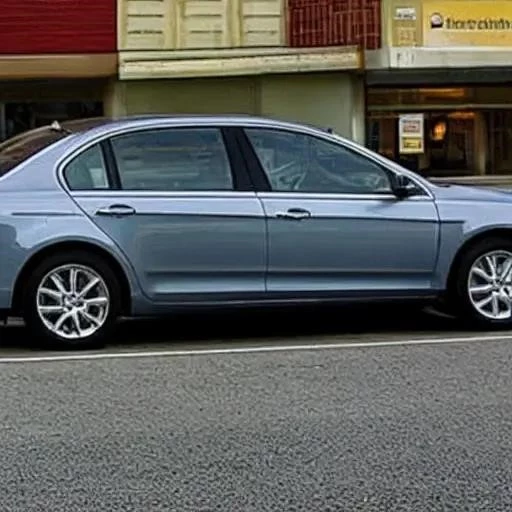
In the intricate universe of automotive engineering and daily driving‚ certain terms‚ seemingly simple‚ hold a profound depth of meaning and immense practical implications. One such concept‚ the ‘near side’ of a car‚ often passes unnoticed by the casual observer‚ yet it subtly dictates everything from vehicle design and urban planning to the fundamental principles of road safety across continents. Far from being a mere directional descriptor‚ this specific side of a vehicle embodies a fascinating intersection of historical convention‚ cultural variance‚ and cutting-edge technological evolution‚ promising a future where our interaction with vehicles is safer‚ smarter‚ and remarkably intuitive.
Traditionally defined as the side of a vehicle closest to the curb when driven or parked‚ the ‘near side’ is not universally fixed; its identity dynamically shifts based on a country’s established rule of the road. In nations adhering to right-hand traffic‚ such as the United States and most of Europe‚ the passenger side‚ positioned on the vehicle’s right‚ becomes the near side. Conversely‚ for countries like the United Kingdom‚ Australia‚ and Japan‚ which observe left-hand traffic‚ the left-hand passenger side assumes this designation. This seemingly minor difference‚ rooted deeply in centuries of equestrian traditions and subsequently codified in early motoring laws‚ profoundly influences design considerations‚ driver training‚ and the strategic deployment of advanced safety systems‚ acting as a crucial‚ yet often uncelebrated‚ cornerstone of modern transportation.
| Attribute | Description |
|---|---|
| Concept Definition | The ‘near side’ of a vehicle refers to the side closest to the curb when driving. This definition is fundamentally dependent on the specific country’s established rule of the road (either left-hand traffic or right-hand traffic). |
| Global Variation | In countries with right-hand traffic (e.g.‚ USA‚ most of Europe)‚ the near side is typically the passenger side (right side of the vehicle). Conversely‚ in countries with left-hand traffic (e.g.‚ UK‚ Australia‚ Japan)‚ the near side is generally the passenger side (left side of the vehicle). |
| Historical Context | The terminology’s origins are deeply rooted in equestrian traditions and the very early days of motoring‚ primarily describing the vehicle side closest to the roadside when pulled over or parked‚ facilitating safer passenger entry and exit away from active traffic flow. |
| Safety & Design Relevance | This concept is critically important for various aspects‚ including meticulous vehicle design (e.g.‚ optimal door placement‚ precise calibration of parking sensors‚ advanced blind spot monitoring systems)‚ comprehensive road safety education programs‚ and thoughtful urban planning‚ significantly influencing curb architecture and pedestrian interaction zones. |
| Reference Link | Wikipedia: Driving on the Left or Right (Provides general context for understanding near side variations globally) |
The importance of the near side extends far beyond theoretical definitions‚ directly impacting vehicle safety and passenger convenience in tangible ways. Consider the meticulous placement of side mirrors‚ crucial parking sensors‚ and advanced blind-spot monitoring systems; each is strategically calibrated‚ taking into account the predominant driving direction and‚ by extension‚ the precise location of the near side. As industry experts frequently emphasize‚ a nuanced understanding of this spatial relationship is incredibly effective in mitigating common urban driving hazards‚ such as accidental curb strikes or collisions during parallel parking maneuvers‚ thereby significantly enhancing overall road safety.
Moreover‚ the evolution of autonomous driving technologies is poised to redefine our interaction with the near side‚ transforming it into an even more critical data point for intelligent vehicle systems. By integrating insights from AI-driven sensor arrays and sophisticated mapping software‚ future vehicles will possess an unprecedented awareness of their peripheral surroundings‚ flawlessly navigating tight urban spaces and safely maneuvering alongside curbs. This progressive shift promises not only to eliminate human error associated with judging distances but also to optimize passenger ingress and egress‚ particularly in ride-sharing scenarios where efficiency and safety are paramount. Leading automotive manufacturers are investing heavily in developing sophisticated algorithms that precisely interpret near-side proximity‚ ensuring seamless operation in diverse environments.
Looking ahead‚ the humble ‘near side’ is becoming a focal point for innovative urban design and smart city initiatives. Planners are increasingly considering how curb access‚ pedestrian safety‚ and even dedicated pick-up/drop-off zones can be optimized by understanding the dynamic relationship between vehicles and their near side. Imagine smart curbs that communicate directly with autonomous vehicles‚ guiding them to perfect parking positions‚ or intelligent street furniture that adjusts to facilitate safer passenger transfers. This forward-looking approach‚ driven by a deeper appreciation for seemingly basic concepts‚ holds immense potential for creating more harmonious‚ efficient‚ and ultimately safer urban environments for everyone. The future of transportation‚ remarkably‚ is being shaped by an intricate dance between global driving traditions and the relentless march of technological innovation‚ with the ‘near side’ playing an unexpectedly pivotal role.